Why Your Size 16 Fits Like a 14 in One Brand and a 18 in Another — The Grading Problem Nobody's Talking About
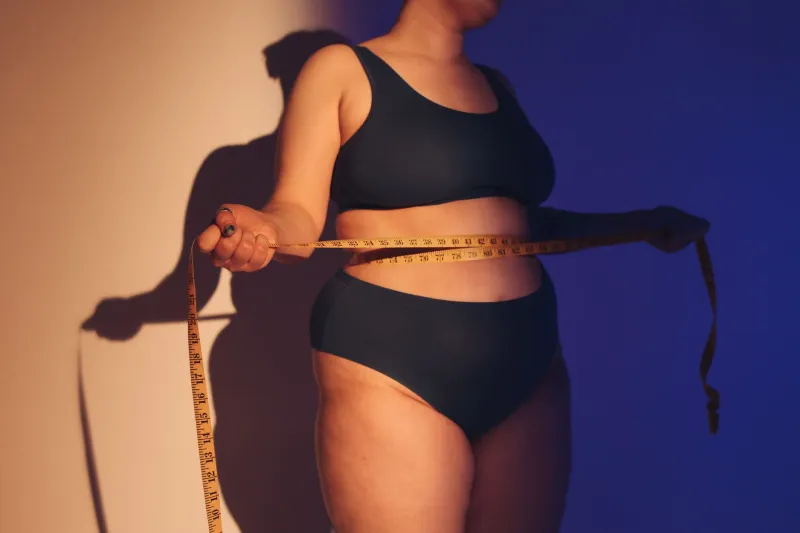
You grab a size 16 from Brand A and it slides on like it was made for you. You try the exact same size from Brand B and you can't get it past your hips. Same number. Completely different experience. If you've been blaming yourself for this — thinking your body is just "difficult" or "inconsistent" — stop right there. What you're bumping up against is one of the fashion industry's most stubborn, least-discussed structural problems: a grading system that was never built with curvy bodies in mind.
What Grading Actually Means (And Why It Matters So Much)
Garment grading is the process by which a base pattern — usually designed in what the industry calls a "sample size," historically a size 6 or 8 — gets scaled up or down to create the full size range you see on store racks. Sounds simple enough, right? Just make it bigger?
Here's the problem: traditional grading adds the same amount of fabric at the same points across every size jump. So if a brand adds one inch to the waist when going from a size 8 to a size 10, it'll keep adding roughly that same inch at every step all the way up to a size 20. That math works reasonably well through the smaller sizes. But by the time you get into plus territory, those uniform increments stop reflecting how curvy bodies actually change proportionally.
A woman who wears a size 18 doesn't just have a uniformly larger version of a size 8 body. Her hip-to-waist ratio might be dramatically different. Her bust might be fuller but her shoulders narrower. Her thighs might need significantly more room than a straight-size grading formula would ever account for. The geometry of a curvy body is genuinely different — not just bigger — and standard grading completely ignores that reality.
The "Grade Rules" Problem
Fit experts in the industry refer to the specific measurements added at each size jump as "grade rules." And for decades, most brands have been using grade rules developed in the mid-twentieth century, based on body measurement data that was both limited in scope and heavily skewed toward straight-size figures.
Alicia Keys — not the singer, but a fit specialist and pattern grader who has worked with several contemporary womenswear labels — put it plainly in a recent industry panel: "The grade rules most companies are still working from were established when plus-size women weren't even considered a primary customer. You're essentially trying to serve a completely different body with a map drawn for someone else."
The result is what curvy shoppers experience every single day: waistbands that gap, bust seams that pull forward, hip circumferences that might technically fit but leave zero ease through the thigh, and necklines that sit completely differently than they do on the fit model. It's not bad luck. It's bad math applied to the wrong body.
Where the Fit Actually Falls Apart
If you want to know exactly where traditional grading breaks down for curvy bodies, here are the most common culprits:
The hip-to-waist differential. Standard grading assumes a relatively consistent ratio between hip and waist measurements as sizes increase. Curvy bodies often have a much larger differential, which means clothes sized for the hips will gap at the waist and vice versa.
Thigh and seat depth. The crotch curve on pants is one of the trickiest areas in plus grading. Standard grade rules often don't add enough depth or length through the seat, which is why so many curvy women deal with pants that fit the waist but ride up constantly.
Bust placement. As sizes increase, the apex of the bust (the point where seaming should sit) moves — but not always in the direction or by the amount that standard grading predicts. This is why darts so often land in the wrong place on larger sizes, causing that dreaded pulling-across-the-chest effect.
Shoulder width vs. bust size. Curvy women don't necessarily have wider shoulders proportional to their bust. Traditional grading widens the shoulder at the same rate as everything else, which can leave larger sizes looking boxy and ill-fitting across the upper body.
What Forward-Thinking Brands Are Actually Doing Differently
The good news — and there genuinely is good news here — is that a growing number of brands are throwing out the old grade rules and starting from scratch with curve-specific blocks.
Universal Standard has been vocal about developing fit standards based on real body data from thousands of women across a wide size range, rather than scaling up from a sample size. Their approach involves creating separate base patterns for different parts of the size spectrum rather than assuming one grading formula works for all.
Torrid, which has operated exclusively in the plus-size space for years, uses fit models across multiple size points rather than just grading from a single base. That means the size 26 isn't just a mathematically extrapolated version of the size 14 — it's been developed and tested on a body that actually wears that size.
Good American built their denim line around what they call "good legs" fit technology, which essentially means acknowledging that women who wear the same waist size can have dramatically different proportions through the hip and thigh — and building stretch and construction into the design to accommodate that range.
Smaller, direct-to-consumer brands like Eloquii and 11 Honoré have also invested in proprietary fit development that starts with plus-size bodies as the baseline, not an afterthought. When the design process begins with a size 16 or 18 fit model rather than scaling up from an 8, the result is clothes that feel like they were actually designed for you — because they were.
What to Look for When You're Shopping
You can't always know a brand's grading philosophy from the outside, but there are some signals worth paying attention to:
- Brands that use multiple fit models across their size range — not just one plus-size model for all sizes 14–24 — tend to produce more consistent fits.
- Brands that publish detailed measurement charts (not just generic S/M/L/XL conversions) are usually working with more precision.
- Brands that offer separate curve or plus-specific versions of styles — rather than just extended sizing on a straight-size design — are more likely to have done the proportional work.
- Customer reviews that specifically mention fit consistency across the size range are a strong signal that a brand has invested in proper grading.
And honestly? Trust your experience. If a brand consistently fits you well, that's data. If another brand consistently disappoints even when you're technically in your size, that's also data — and it says something about their grading, not about your body.
The Bigger Picture
The fashion industry's grading problem isn't just a technical inconvenience. It's a reflection of who the industry historically chose to design for — and who it chose to treat as secondary. When curvy women struggle to find clothes that fit, the cultural message (intentional or not) is that their bodies are aberrations from a norm, rather than a completely valid and common body type that deserves thoughtful design.
The brands getting it right are doing more than fixing a pattern problem. They're making a statement about whose bodies deserve to be dressed well. And as more of them invest in genuine curve-specific development, the bar for everyone else rises too.
You deserve clothes that fit because they were built for you — not because you found a lucky workaround in someone else's formula.