When Petite Meets Curvy: Why the Usual Proportion Rules Were Never Written for You
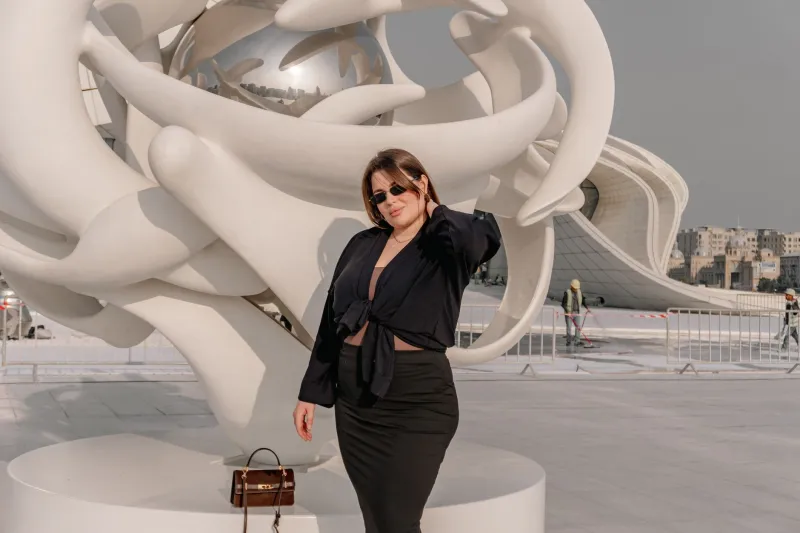
Let's be honest: most styling advice for petite women was written with one body in mind — small all over. Narrow hips, minimal bust, a frame that basically disappears into a straight column. And while that advice might work for some shorter women, it leaves petite curvy women completely stranded.
If you're carrying significant curves on a smaller frame, you've probably tried the "rules" — wear monochromatic looks, go for vertical lines, avoid anything oversized — and ended up looking nothing like the magazine promised. That's not a failure on your part. It's a failure of advice that was never designed for you in the first place.
So let's start over.
The Core Problem: Two Sets of Advice That Contradict Each Other
Here's the fundamental tension no one talks about. Standard petite styling says: elongate everything, minimize visual breaks, keep it streamlined. Standard curvy styling says: define your waist, embrace structure, create balance between your upper and lower body. Put those two directives together and they start pulling in opposite directions almost immediately.
Take the classic "tuck your top in" advice. For curvy women, this is gold — it defines the waist and creates proportion between a fuller bust and hips. But if you're petite, a high-rise tuck can visually shorten your torso even further, making your legs look shorter in the process. So do you tuck or not? The answer is: it depends, and that nuance is exactly what generic advice skips over.
The same conflict shows up with maxi skirts (elongating for petite women, but can overwhelm a curvy frame without the right waist definition), wide-leg pants (trendy and curve-friendly, but can eat a petite woman alive without the right proportions), and oversized blazers (great for curvy balance, potentially swamping a shorter torso).
The point isn't that these pieces don't work for you — it's that they require a different approach.
Why "Elongating" Advice Often Backfires
The word "elongating" gets thrown around constantly in petite fashion content, and it usually means: wear things that make you look taller. Nude heels, vertical stripes, monochromatic dressing. The logic is sound for a straight-framed petite woman. But when you have curves, the goal isn't just height — it's proportional balance.
Here's where it gets tricky. Vertical stripes, for example, can draw the eye straight up and down in a way that actually emphasizes width rather than length on a curvy body, depending on the stripe width and placement. Nude heels do create the illusion of longer legs, but if you're also dealing with a shorter torso and a fuller bust, the proportions above the waist still need addressing — and a nude heel alone won't fix that.
Monochromatic dressing is genuinely helpful for petite curvy women, but not just because it elongates. It works because it removes visual interruptions that can make a curvy, shorter frame feel "busy." That's a subtle but important distinction. You're not trying to look taller — you're trying to create visual flow.
The Strategies That Actually Work
Prioritize waist definition, but be specific about where your waist sits. Not all waists are created equal, and on a petite curvy frame, a natural waist that sits higher than expected (or lower) can throw off every proportion decision you make. Find your actual narrowest point and dress to that — not to where fashion says your waist "should" be.
Embrace cropped proportions thoughtfully. A cropped jacket or top can be genuinely transformative for petite curvy women because it shortens the upper body visually, making legs appear longer without sacrificing waist definition. The key word is "thoughtfully" — a crop that hits right at the widest point of your hips will work against you. Aim for a hem that lands just above or right at the natural waist.
Rethink your hem lengths based on your specific curve placement. If your curves are concentrated in your hips and thighs, a midi skirt that hits at the widest part of your calf can actually create beautiful proportion by balancing the hip width above. If your curves are more in your bust, a midi length can sometimes feel heavy without the right top balance. There's no universal answer — but awareness of where your curves sit changes everything.
Choose structured fabrics over flowy ones more often than you think. Flowy fabrics are frequently recommended for curvy women because they drape rather than cling. But on a petite curvy frame, too much drape can read as volume — and volume on a smaller frame can feel overwhelming rather than effortless. Light structure (think ponte, a good quality jersey, or a soft crepe) gives your curves shape without adding visual bulk.
Play with scale in your accessories and prints. Petite style guides often say "go small with everything" — small bag, delicate jewelry, tiny prints. But curvy women often benefit from medium-to-bolder scale elements that balance their proportions. The sweet spot for petite curvy women is usually medium scale: not so small that accessories disappear against your curves, not so large that they overwhelm your frame.
The Tailoring Conversation You Need to Have
If there's one investment that pays off more for petite curvy women than almost anyone else, it's tailoring. Off-the-rack clothing is sized for a fairly narrow range of proportions, and when you're combining petite height with significant curves, you're almost guaranteed to be outside that range in at least one direction.
The most common alterations that make a real difference: taking in the waist on dresses and pants that fit your curves but gap at the midsection, shortening hems without disrupting the intended silhouette, and adjusting shoulder seams on jackets and blazers that fit your bust but are cut for a taller frame.
None of these alterations need to be expensive. Building a relationship with a local tailor — or even learning a few basic hemming skills yourself — can turn a "this almost works" piece into something that feels genuinely made for you.
Reframing the Goal Entirely
Here's the mindset shift that might matter most: stop trying to look taller or "slimmer" (a word we're retiring here) and start thinking about visual harmony. Your petiteness and your curves are both real, both permanent, and both worth dressing intentionally — not minimizing.
When you approach your wardrobe with the goal of creating balance between your specific proportions rather than conforming to someone else's proportion ideal, the whole project gets more interesting. You're not following rules anymore — you're making deliberate choices based on how your body actually looks and how you want to feel in it.
That's a much better starting point than any style guide that doesn't know you exist.