Tailor Made (or Not): The Honest Guide to Alterations for Curvy Bodies
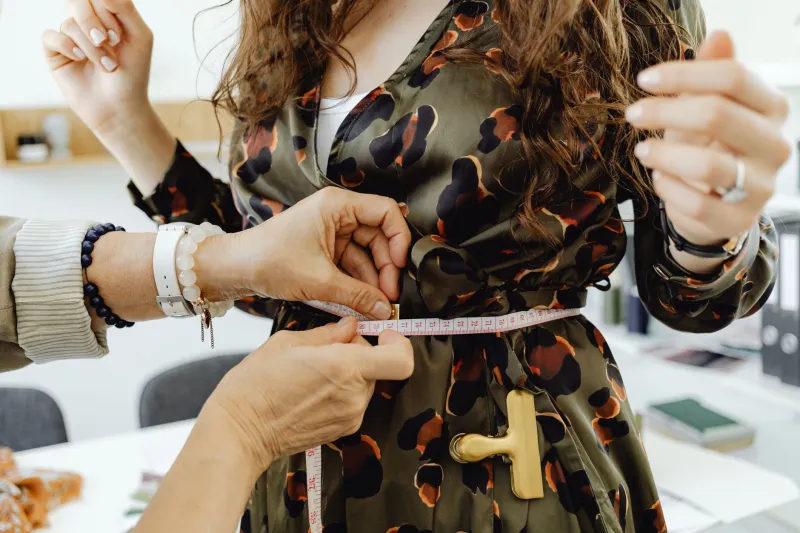
Let's be honest — finding a piece that fits perfectly off the rack when you're curvy is basically a minor miracle. Most of us have learned to celebrate the wins and make peace with the gaps. But somewhere along the way, a well-meaning friend, a salesperson, or a hopeful Pinterest deep-dive convinced us that a good tailor can fix anything.
Spoiler: they can't. Or rather, they can — but not always in ways that actually flatter you.
Alterations are a real tool, and a skilled tailor can be genuinely life-changing for curvy shoppers. But the alteration calculus is different when you've got curves that the original pattern wasn't designed around. What works for a straight-size garment doesn't always translate, and some fixes create new problems while solving the original one. Here's how to think it through before you hand over your credit card.
The Alterations That Are Almost Always Worth It
Hemming is the low-hanging fruit of the alteration world, and it's just as useful for curvy bodies as anyone else's. Midi skirts that hit wrong on your calf, trousers that pool on the floor, maxi dresses that drag — these are quick, affordable fixes that don't touch the garment's structure. The only curve-specific caveat? If a hem is cut on a curve (like a flared skirt), make sure your tailor accounts for that arc. A straight cut on a curved hem will look off.
Taking in the waist on pants or skirts is another solid investment — if the rest of the garment fits. If a pair of trousers fits your hips and thighs but gaps at the waistband, a waist suppression is straightforward and usually inexpensive. This is one of the most common curvy-body fit issues, and it's genuinely fixable.
Shortening straps on dresses, tanks, and jumpsuits is another underrated alteration. When you've got a fuller bust, straps often sit differently on your shoulders, which throws off the neckline and bodice position. A simple strap adjustment can reset the whole fit without touching the body of the garment.
Where It Gets Complicated: The Middle-Ground Fixes
Letting out seams sounds simple, but it depends entirely on how much seam allowance the brand left in the garment. Fast fashion? Expect almost nothing to work with. Higher-end pieces sometimes have enough fabric to let out a size — sometimes not. Always ask your tailor to check before you get excited about this one.
Adjusting bust darts is trickier than it sounds. Darts are engineered to point toward the fullest part of the bust, and on a curvy body, that apex is often in a different place than the pattern assumed. Moving or re-shaping a dart requires a tailor who genuinely understands fit — not just someone who does basic hemming. Done well, this can transform a blouse or structured dress. Done carelessly, it can leave you with puckering, pulling, or a silhouette that reads as just... off.
Re-cutting a neckline is one of those alterations that sounds appealing but rarely ends well unless you're working with a skilled dressmaker rather than a standard alterations shop. Changing a neckline involves restructuring the facing, sometimes the interfacing, and occasionally the shoulder seam. It's expensive, and the results are inconsistent.
The Alterations That Usually Aren't Worth Pursuing
Resizing a structured jacket or blazer is where things get genuinely complicated for curvy bodies. Blazers are built around a specific silhouette, and the shaping — the shoulder seams, the lapel roll, the side seams — all work together as a system. If a blazer fits your shoulders but gaps over your bust or strains across your back, you're often looking at a structural rebuild rather than a simple fix. The cost frequently exceeds what you paid for the piece, and the result rarely looks seamless. This is usually a walk-away situation.
Altering the rise on pants is another one that sounds doable but often creates a cascade of new issues. Raising or lowering the rise affects the crotch curve, the waistband placement, and the overall drape of the leg. On curvy bodies — where the relationship between waist, hip, and thigh measurements is already working against standard patterns — this alteration can easily introduce pulling, bunching, or a seat that fits wrong in an entirely new way.
Converting a straight-cut dress into something fitted is a fantasy alteration. Taking in a boxy or shift-style dress to create a more defined silhouette requires rebuilding the garment's architecture. Unless you're working with a couture-level dressmaker and you're prepared to pay couture-level prices, the results will likely disappoint.
The Walk-Away Calculation: When to Skip the Tailor Entirely
Here's the question nobody asks out loud: at what point does the cost of alterations exceed the value — emotional or financial — of owning that specific piece?
A good rule of thumb is the one-third rule: if the alterations will cost more than a third of what you paid for the item, it's worth pausing. That's not a hard stop, but it's a prompt to ask yourself whether you love this piece enough to invest that much, or whether you're just trying to make something work that was never designed for your body.
The other version of the walk-away moment is when an alteration requires compromising one fit issue to solve another. If fixing the waist on a dress means the hip seam sits wrong, or if letting out the back of a jacket throws off the sleeve pitch — that's the garment telling you it wasn't built for your proportions. No amount of tailoring will fully fix a pattern that was never written with your body in mind.
Finding a Tailor Who Actually Gets It
Not all tailors have equal experience with curvy bodies. When you're vetting someone new, bring a piece you already love and ask them to assess the fit. Their observations will tell you whether they understand how curves affect garment behavior — or whether they're working from a textbook that assumed a 36-inch hip was the ceiling.
Word of mouth from other curvy women in your city is genuinely the best referral system here. Local Facebook groups, neighborhood apps, even asking in curvy fashion forums — someone in your area has already done this research.
The Bottom Line
Alterations are a tool, not a magic wand. Used strategically, they can extend the life of pieces you love and rescue near-perfect finds from the reject pile. But the curvy shopper who invests in every potential fix often ends up spending more money, more time, and more frustration than the one who gets selective.
Know what's fixable. Know what's not. And give yourself full permission to walk away from anything that was never going to work — no matter how much you wanted it to.