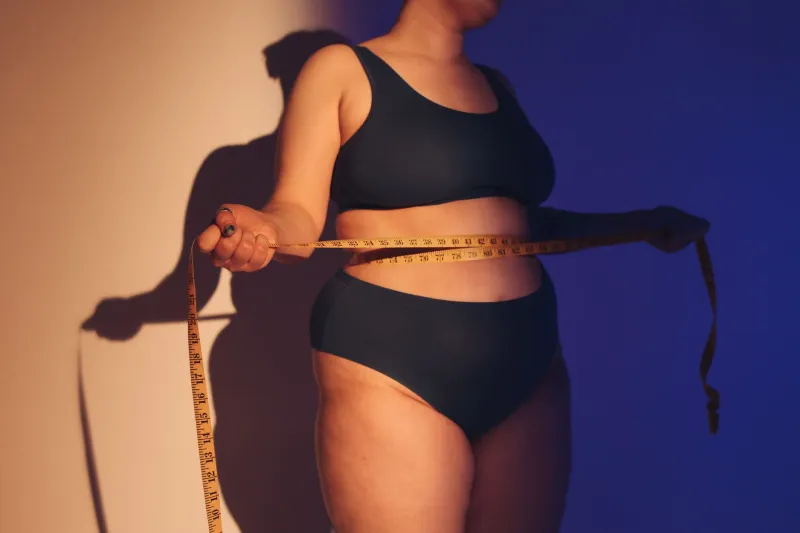
Who Told You That Was a Problem? The Truth About Bra Fit, Breast Shape, and the Industry Selling You Shame
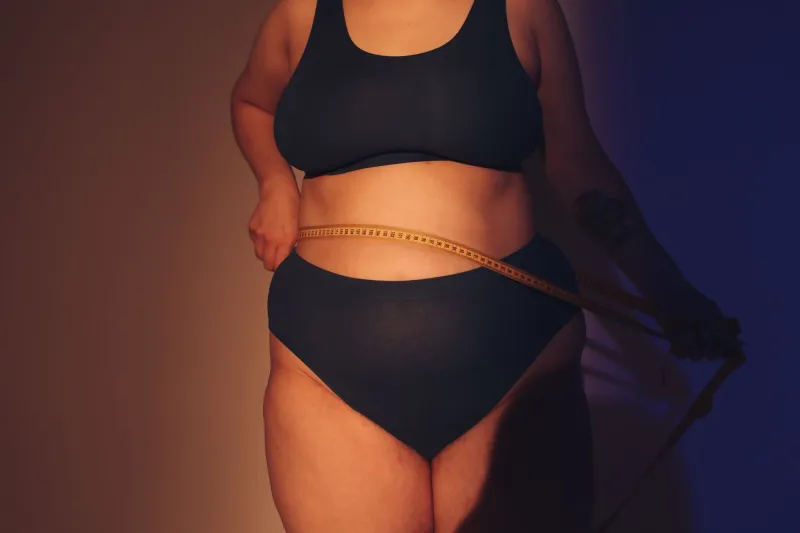
Let's start with a question nobody in the lingerie aisle ever asks you: Who decided that was a flaw?
If you've ever stood in a fitting room while a well-meaning sales associate pointed at your chest and used the word "spillage" — like your body was a cup of coffee tipping over — you already know the feeling. That low-grade flush of embarrassment. The quiet acceptance that something about the way you're built needs to be corrected, contained, or at the very least, managed.
Here's the thing, though. A lot of what the intimates industry calls a "fit problem" is just... a curvy body existing in space. And the difference between a legitimate comfort issue and a manufactured insecurity is something the industry has a very strong financial incentive to keep blurry.
The Billion-Dollar Business of "Fixing" You
The U.S. lingerie market is worth over $13 billion annually, and a significant chunk of that revenue is built on the premise that curvy and full-busted women are inherently difficult to fit. Brands have spent decades developing entire product lines — minimizer bras, side-smoothing panels, "full-coverage" cuts marketed with barely concealed alarm — that frame natural breast tissue as something to be disciplined.
The language is everywhere once you start noticing it. "Control." "Smooth." "Minimize." "Tame." These aren't neutral fit descriptors. They're loaded words that position your body as the problem and the product as the intervention.
And the marketing works, because it taps into something real: most curvy women have experienced genuine discomfort from poorly fitting bras. Underwire that digs. Straps that cut. Bands that ride up. Those are legitimate issues. But somewhere along the way, the industry conflated actual discomfort with the mere appearance of curves — and convinced us that both needed solving.
So What's Actually a Fit Issue?
Let's be clear: real bra fit problems exist, and they matter. A bra that doesn't fit properly can cause back pain, skin irritation, and posture issues that compound over time. That's not trivial, and getting a proper fit is genuinely worth the effort.
Here's what an actual fit problem looks like:
- The band is doing nothing. The band should provide around 80% of your support. If it's riding up your back or you can pull it more than an inch away from your body, it's too loose — and your straps are doing work they were never designed to do.
- The underwire is sitting on breast tissue. The wire should sit flat against your ribcage and chest wall, framing the breast rather than cutting into it. If it's poking or pressing against tissue, the cup size or wire shape is wrong for you.
- You're experiencing consistent skin breakdown. Redness, chafing, or indentations that last hours after you take your bra off are your body's way of saying the fit is genuinely off.
- The center gore isn't lying flat. That little piece of fabric between the cups should sit against your sternum. If it's floating, you likely need a different cup size or a different style altogether.
These are real, fixable issues. None of them are about how your body looks.
What's NOT a Fit Problem (Despite What They're Selling You)
Now here's where it gets interesting — and honestly, a little infuriating.
Breast tissue that's visible above the cup line is not automatically a sign that your bra doesn't fit. Breast shape varies enormously. Some women have what's called "projected" or "east-west" breast shapes that simply don't work with certain cup constructions, no matter the size. A plunge or balconette style might show more of your natural silhouette than a full-coverage cup — and that's a style preference, not a malfunction.
Softness or natural movement is not a problem. The obsession with creating a perfectly smooth, static silhouette under clothing is an aesthetic choice that's been repackaged as a fit standard. Your breast tissue moving when you move is not evidence that your bra has failed.
Not being "minimized" is not a problem. The entire concept of a minimizer bra is predicated on the idea that your chest is too large to be acceptable as-is. That's not a fit philosophy — that's a value judgment dressed up in technical language.
Cleavage is not a fit emergency. The number of women who have been steered toward more "modest" or "appropriate" styles under the guise of fit advice is staggering. Your cleavage is not a fitting room crisis.
The Shame Spiral Is Designed to Keep You Spending
Here's the uncomfortable truth: an industry that convinces you your body is perpetually difficult to fit is an industry that guarantees you'll keep coming back. If the standard is a smooth, contained, minimized silhouette that your natural shape will never quite achieve, you will spend years — and a lot of money — chasing a fit that was never actually designed for you.
This is especially acute for curvy women, who are disproportionately targeted with "problem-solution" marketing in the intimates space. Full-bust brands have done incredible work expanding sizing and creating genuinely supportive options for larger cup sizes. But even within that space, there's a creeping tendency to frame fuller figures as engineering challenges rather than bodies deserving of beautiful, comfortable options.
The next time a product promises to "control" or "smooth" or "correct" something about your silhouette, it's worth asking: correct it toward what, exactly? And who decided that was the goal?
How to Actually Shop for Bras When You're Curvy
The good news is that once you've separated the legitimate fit criteria from the shame-based ones, shopping gets a lot clearer.
Start with band size. Most women are wearing a band that's too large, which means the bra is riding up and the straps are compensating. Go down a band size and up a cup size — it's called sister sizing, and it can be revelatory.
Prioritize your comfort over a particular silhouette. If a plunge bra feels comfortable and you like how it looks, the fact that it shows more of your natural shape is not a problem. If a full-coverage style feels restrictive, the fact that it "looks neater" is not a good enough reason to wear it every day.
Seek out brands that talk about fit in neutral, body-positive language. There are genuinely great full-bust brands out there — Natori, Elomi, Curvy Kate, Wacoal's fuller-bust lines, and others — that focus on actual structural support without the shame-adjacent marketing.
And finally: trust your own body's feedback. Discomfort is information. But the absence of a perfectly smooth line under your T-shirt? That's just you, existing exactly as you are.
The Bottom Line
Your curves are not a fitting problem. Some bras will work better for your shape than others — that's true for every body. But there's a meaningful difference between finding what genuinely feels good and spending money on products designed to make you feel like your natural shape is something to be hidden.
The intimates industry has been blurring that line for a long time. You don't have to let it.